01
The queue was full of small, repeated decisions
The fictional company Northfield Services had a support desk handling account questions, access requests, and operational exceptions. Staff spent much of each shift finding policy, summarizing ticket histories, and assigning the right owner. The organization wanted assistance without granting a model general administrative access.
We divided the workflow into low-risk information tasks and consequential actions. Summarizing a ticket is different from changing a user’s access. Both might appear in the same conversation, but they should not share the same authorization pathway.
02
Separate reasoning from execution
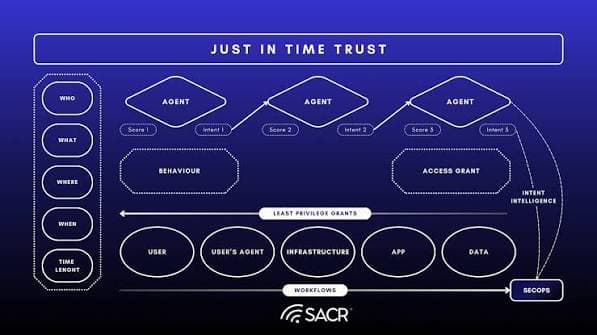
The assistant could retrieve approved support material, suggest a category, and draft a response. Any action request was translated into a structured proposal with an explicit target, the requesting identity, and the policy that allowed it. A conventional authorization service validated the proposal before execution.
For sensitive changes, a staff member reviewed the proposed action. Approval applied only to that action and expired if the request changed. A model’s persuasive explanation did not override the policy check or broaden a credential’s scope.
03
Design for retries and exceptions
Support tools sometimes return partial results or timeout after accepting a request. We attached idempotency keys to executable operations and recorded the outcome in a transaction log. The assistant checked that log before proposing a retry.
When the workflow could not determine whether an action had completed, it escalated to a human with the available evidence. It did not repeat the action simply because the conversational response looked incomplete.
- Retrieve policy using the current user’s allowed scope.
- Validate tool arguments against a schema and independent policy.
- Require explicit approval for consequential changes.
- Record identity, target, approval, and result in a searchable audit trail.
04
Illustrative results from the assisted workflow
The scenario figures cover a fixed set of ordinary support categories. They are invented outcomes for explaining the design and do not represent Twinlink’s current support volume.
| Measure | Scenario baseline | Scenario outcome |
|---|---|---|
| Median first-triage time | 11 minutes | 6 minutes |
| Tickets returned for incorrect routing | 14% | 7% |
| Executable changes with an audit record | 82% | 100% |
| Sensitive access changes without human approval | Not permitted | Not permitted |
05
Why this pattern is useful for operations leaders
The business value comes from removing repeated searching and formatting while keeping control over actions. An assistant can be helpful even when it is not autonomous. In fact, a narrow and auditable workflow often earns wider adoption than a general agent with unclear authority.
A practical handover includes a maintained tool inventory, an approval matrix, and a review of failure cases. The system should be evaluated as an operational service, with owners and rollback paths, rather than as a prompt that only one person understands.